
Can Dental Implants Be Removed? When and How It Is Done
Yes, dental implants can be removed. Although dentists design implants to be permanent, a dentist or oral surgeon can take it out if it fails, gets infected, breaks, or was placed in the wrong spot. In most cases, removal is a short procedure under local anesthesia, and your dentist can often place a new implant later.
Quick answer
Can they be removed? Yes, by a dental professional. You cannot remove an implant yourself.
Why? Most often because of an infection around the implant (peri-implantitis), an implant that never fused to the bone, a broken implant, or a poor position.
How? Usually with a counter-torque tool that turns the implant out. In a study of 749 implants, this method worked 98.4% of the time (Anitua et al., 2020).
Are Dental Implants Removable?
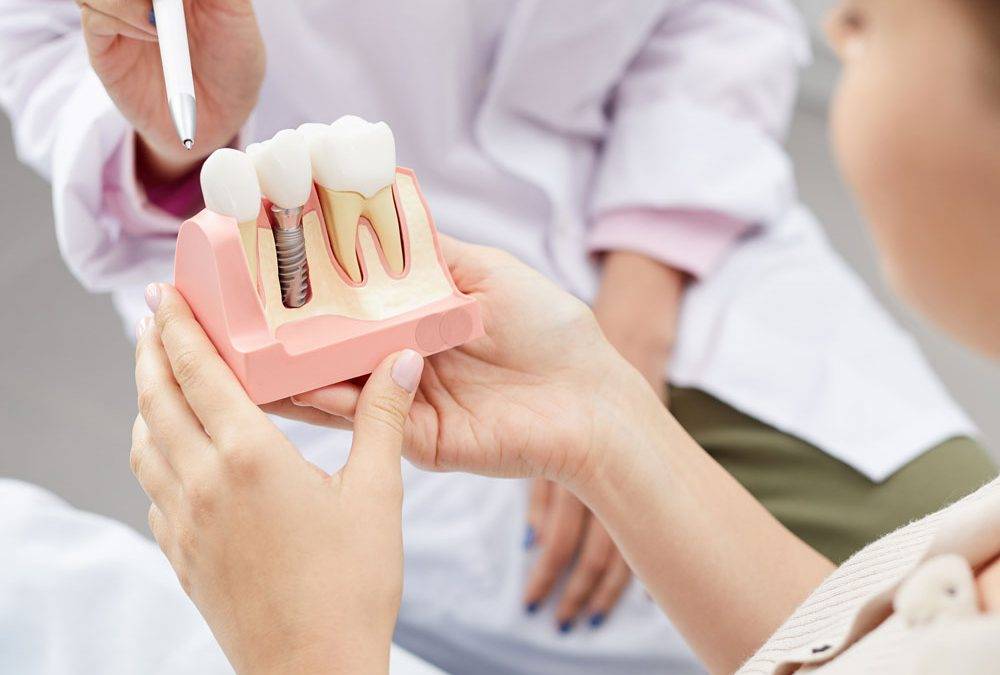
It depends on which part you mean. An implant restoration has three parts:
| Part | What it is | Can it come out? |
|---|---|---|
| Implant post | Titanium or zirconia screw in the jawbone | Only by a dentist or surgeon |
| Abutment | Connector between the post and the tooth | A dentist can unscrew it |
| Crown, bridge, or denture | The visible teeth | Fixed types: by a dentist. Snap-in overdentures: by you, daily |
So when people ask whether dental implants are removable, the short answer is no for the post and sometimes yes for the teeth on top. Our guide to the types of dental implants explains fixed and snap-in options in more detail.
Why Dental Implants Are Removed
Implants have a strong track record. A 2019 systematic review estimated that about 93% to 96% are still in place after 10 years (Howe et al.). Still, a small share run into problems. These are the most common reasons for removal:
- Early failure. The bone never fuses to the implant, so it stays loose. As a result, this usually shows up within the first few months.
- Peri-implantitis. Bacteria cause inflammation and bone loss around the implant, similar to gum disease around a natural tooth. Advanced cases may not respond to cleaning or surgery.
- A broken implant or screw. Over time, heavy grinding or biting forces can fracture parts of the implant over time.
- Poor position. For example, an implant at the wrong angle can make it hard to attach a natural-looking tooth, or it may crowd other teeth.
- Nerve or sinus problems. Rarely, an implant presses on a nerve and causes numbness or pain, or it affects the sinus.
- A change in treatment plan. Occasionally, a dentist removes older implants to make room for a new full-arch solution.
How Dental Implants Are Removed
First, the dentist takes X-rays or a 3D scan to see how much bone surrounds the implant. Then the dentist numbs the area. After that, the method depends on whether the implant is loose or still fused to the bone:
- Loose implants usually come out easily with simple instruments, much like a loose tooth.
- Counter-torque removal. For a fused implant, a special tool grips it and turns it in the reverse direction until the bond with the bone breaks. It saves the most bone, and in the Anitua study it succeeded in 98.4% of 749 implants.
- Piezo or ultrasonic instruments gently loosen the bone contact when turning alone is not enough.
- Trephine bur. A hollow drill cuts a thin ring of bone around the implant. Because it removes more bone, it is usually a last resort.
The procedure itself often takes less than an hour. Afterward, the dentist may add a bone graft to support a future implant.
What Happens After Dental Implants Are Removed?
Recovery is similar to a tooth extraction. In general, you can expect some swelling and soreness for a few days. Meanwhile, eat soft foods, avoid smoking, and keep the area clean as instructed.
Next comes the question of replacement. There are generally three paths:
- Immediate new implant: possible when there is enough healthy bone and no active infection.
- Graft, heal, then replace: the most common path after infection or bone loss. Bone typically needs three to nine months to fuse with a new implant.
- A different option: a bridge or a denture, if another implant is not the right fit.
Signs Your Dental Implant May Need Attention
Fortunately, catching problems early can save an implant. Call your dentist if you notice:
- Bleeding, redness, or swelling of the gums around the implant
- Pus, a bad taste, or bad breath that will not go away
- An implant or crown that feels loose or moves
- Pain when chewing, or pain that develops months or years after placement
- Gums pulling back so that metal becomes visible
In many cases, the problem is only a loose crown or screw, which is a quick fix. At Luxe Dental in Lauderhill, we can examine a troublesome implant, take X-rays, and explain your options. We also place new dental implants and All-on-4 full-arch implants. Related reading: when dental implants go wrong.
Questions
Removing Dental Implants: FAQs
Can dental implants be removed?
Yes. A dentist or oral surgeon can remove an implant that is loose, infected, broken, or in the wrong position. Today, dentists can take most of them out with a reverse-turning tool, without cutting away much bone.
Are dental implants removable like dentures?
No. The implant post sits in the jawbone, so you cannot take it out at home. However, some teeth that sit on implants, called overdentures, snap on and off for cleaning.
Does removing a dental implant hurt?
Your dentist numbs the area first, so you should feel pressure but not sharp pain. Afterward, the soreness usually feels like having a tooth pulled, and over-the-counter pain relievers help.
Can a removed implant be replaced?
Often, yes. Sometimes the dentist places a new implant the same day. In other cases, the site needs a bone graft and a few months of healing before a new implant goes in.
Can dental implants be removed and replaced with dentures?
Yes, although it is rarely necessary. After removal, the gums and bone heal, and then your dentist can make a denture. Many people instead keep their implants and use them to hold a snap-in denture.
Can you unscrew a dental implant?
A dentist can often unscrew the crown and the connector piece (abutment). However, the implant itself fuses to the bone, so removing it takes special tools and a trained professional.
Worried About an Implant?
Loose, sore, or infected implants are easier to treat when they are caught early. Call Luxe Dental in Lauderhill, and we will take a look.
Luxe Dental · 5280 N University Dr, Lauderhill, FL 33351
Sources
- Anitua E, Fernandez-de-Retana S, Alkhraisat MH. Performance of the counter-torque technique in the explantation of nonmobile dental implants. Int J Implant Dent. 2020. (link)
- Howe MS, Keys W, Richards D. Long-term (10-year) dental implant survival: a systematic review and sensitivity meta-analysis. J Dent. 2019. (link)
- Cleveland Clinic. Dental implants. (link)
Read next
- Types of Dental ImplantsThe four implant types and how a dentist picks between them.
- When Dental Implants Go WrongThe failures that lead to a removal, and the warning signs that come first.
- Dental Implant AftercareCare that keeps a replacement implant from going the same way.